Why yield prediction models lose accuracy across regions
The accuracy gap nobody budgets for
Crop yield prediction models often look accurate — until they are deployed somewhere new. A model trained in one geography can perform well locally, but when applied to another region, results start to drift. The same inputs, the same logic, yet very different outcomes.
This is not a small technical issue. In agriculture, inaccurate crop yield prediction directly affects procurement planning, storage allocation, logistics, and forward pricing decisions. What looks like a minor percentage error at the model level can turn into large operational inefficiencies at scale.
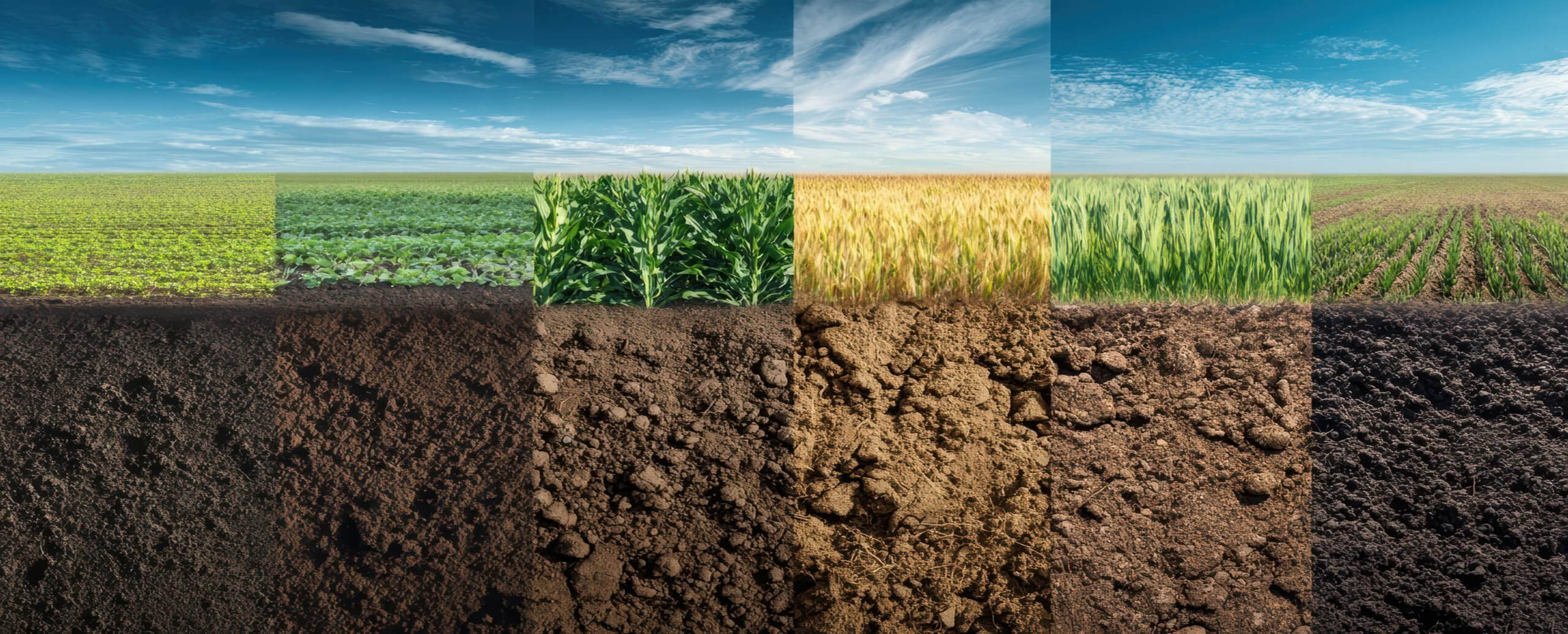
Most teams assume that once a yield prediction model works, it can be reused globally. In reality, agriculture is highly local. Soil, climate, irrigation, and farming practices vary significantly across regions, and these differences are often not explicitly captured in the model.
This article explains why crop yield prediction accuracy by region varies so much, what causes models to fail outside their training geography, and how to design a geography-aware yield prediction model that remains reliable as you scale.
Not sure if your model is overfitting to one geography?
What most crop yield prediction models rely on today
Most machine learning crop yield prediction systems are built on a similar set of inputs. These typically include historical yield data, NDVI indicators, satellite imagery, and crop development signals throughout the season.
These inputs are powerful. Modern models using this data can reach R² levels of 0.85–0.93, significantly outperforming traditional statistical approaches that often sit in the 0.60–0.75 range. This is why AI yield prediction in agriculture has become such a strong focus for AgTech platforms.
However, there is a hidden limitation. Most models are trained and validated within the same geography. They learn patterns specific to that region — not universal agricultural rules.
For example:
1. NDVI can explain a large portion of yield variability, but its relationship with yield depends on crop type, soil, and climate
2. Satellite imagery captures patterns, but not always the underlying causes
Historical yield data reflects past conditions that may not generalize
As a result, while machine learning crop yield prediction works well locally, it often struggles when applied across regions. The challenge is not building a good model — it is building one that works everywhere.
Why yield prediction models fail across regions
The core issue is geographic overfitting. A yield prediction model trained in one region implicitly learns that region’s conditions — soil composition, irrigation methods, climate patterns, and cultivation practices. These are not always explicit inputs. They are embedded assumptions.
When the same model is applied elsewhere, those assumptions break.
Key factors most models fail to account for:
1. Soil composition — soil organic carbon, texture, and nutrient levels directly influence yield ceilings
2. Irrigation practices — irrigated vs rain-fed systems behave differently
3. Cultivation methods — planting density, fertilization strategies, and crop varieties vary widely
4. Local climate patterns — temperature ranges, rainfall timing, and stress events differ by region
5. Agronomy practices — local expertise and field management decisions are rarely encoded
6. Field-level variability — even within the same country, yield conditions can differ significantly
7. Global data shows that yield variability is especially high in regions like Eastern Europe, Central Asia, and MENA — exactly where generic models tend to perform the worst.
This leads to a fundamental conclusion: a yield prediction model is not just predicting crops — it is predicting a specific agricultural system. When that system changes, accuracy drops.
What regional accuracy failure actually costs at scale
The impact of inaccurate agricultural yield prediction goes far beyond model metrics. AI is expected to unlock up to $250B in value across agriculture, with a significant share driven by yield optimization. But that value depends on prediction accuracy. If forecasts are wrong in key regions, the entire analytics layer loses credibility.
For example:
1. Procurement teams overestimate supply
2. Storage infrastructure is misallocated
3. Pricing strategies become unreliable
4. Risk exposure increases
This directly affects adoption. Many farmers and agribusinesses still hesitate to invest in precision agriculture technologies because ROI is unclear. Inaccurate predictions reinforce that hesitation.
A yield forecasting AgTech platform that cannot maintain accuracy across regions does not just underperform — it creates distrust.
And in agriculture, once trust is lost, adoption slows down significantly.
Building a geography-aware yield prediction model
The solution is not to build a bigger universal model. It is to build a geography-aware yield prediction model. Instead of treating regional context as noise, it becomes a core input.
Key principles:
1. Regional calibration
Models should be trained and fine-tuned per geography using local data.
2. Explicit soil and irrigation encoding
Soil and water management variables must be directly included, not inferred.
3. Local agronomic context integration
Planting schedules, crop varieties, and input strategies should be modeled explicitly.
4. Per-region validation
Accuracy must be measured independently for each region, not just globally.
This approach changes how machine learning crop yield prediction systems are designed. Instead of one global model, you get a layered system that adapts to regional conditions. Studies show that combining structured agronomic models with machine learning can reduce prediction error by 8–20%. That improvement comes directly from incorporating regional context. This is what scalable crop yield forecasting actually requires.
What this looks like in a real AgTech analytics platform
In practice, a geography-aware AgTech analytics platform follows a three-layer architecture:
1. Data layer
Satellite imagery and NDVI signals
Field boundary data
Historical yield records
Soil, climate, and agronomic context
2. Model layer
Shared backbone capturing general crop behavior
Regional calibration layers trained on local data
Continuous updates based on new season inputs
3. Output layer
Yield predictions with confidence scores
Region-specific reliability indicators
Flags for manual review where accuracy is lower
This architecture allows platforms to scale across regions without losing accuracy.
Instead of assuming that all fields behave the same, the system adapts to local conditions. Predictions reflect what is actually happening in the field — not what happened somewhere else.
Agriculture is local. Your yield models should be too.
Crop yield prediction models are not inherently flawed. They are just often applied beyond the conditions they were designed for.
Generic models carry embedded assumptions. When those assumptions do not match the local environment, accuracy drops.
Geography-aware yield prediction models solve this by making regional context explicit — soil, irrigation, climate, and farming practices become part of the system, not hidden variables.
As agriculture becomes more data-driven, the ability to maintain prediction accuracy across regions will define which platforms succeed.
The opportunity is massive. But capturing it depends on one thing: building systems that understand agriculture as it actually works — locally, not globally.