AI in farming: how to build an ai agent for your business
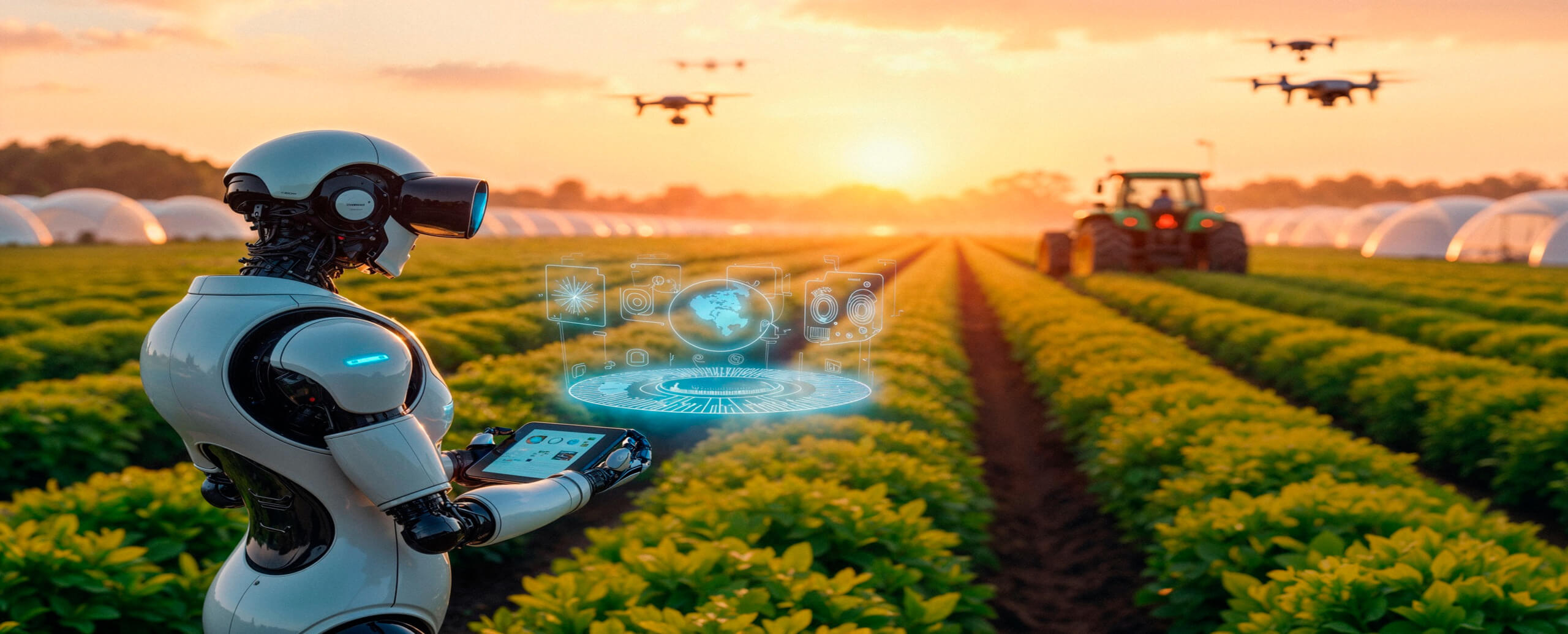
AI in farming is increasingly powered by a new class of tools called AI agents – autonomous digital assistants that use artificial intelligence and machine learning (AI/ML) to perform tasks, make decisions, and interact with users. Unlike static software or one-time automation scripts, AI agents are dynamic. They can process new data, learn from patterns, and adjust their actions over time, making them far more adaptable to the complex realities of agriculture.
To put their impact in perspective:
Approximately 35% of farm management tasks now incorporate both IoT and AI technologies, streamlining operations and boosting productivity.
The global AI in agriculture market – a proxy for adoption and investment in AI-driven tools – is expected to grow from USD 4.7 billion in 2024 to USD 46.6 billion by 2034, expanding at a remarkable compound annual growth rate (CAGR) of 26.3%.
These numbers highlight not only the rising reliance on AI agents for farm tasks but also the broader momentum behind AI integration across agriculture at scale.
What is an AI Agent?
At a basic level, an AI agent goes beyond “if this, then that” rules. Traditional automation is rigid – you program it to trigger the same response every time. AI agents, by contrast, are capable of reasoning with multiple variables, prioritizing tasks, and even holding natural conversations through platforms like WhatsApp, Telegram, or voice interfaces. This makes them accessible and useful for farmers who may not want to dive into complicated dashboards.
Their relevance to agriculture comes from the nature of farming itself. Running a farm involves massive amounts of data—from IoT sensors in the soil, to weather forecasts, to financial and operational records. Much of this data is repetitive and time-sensitive, yet critical for making good decisions. AI agents act as a bridge: they take in the complexity, filter out the noise, and provide farmers with timely, actionable insights. For example, instead of manually analyzing spreadsheets of soil moisture levels, an AI agent can alert a farmer directly when irrigation is needed, or automatically create a weekly report on crop health and finances.
The concept isn’t limited to agriculture. In finance, AI agents already help automate loan approvals and detect fraud. In healthcare, they assist doctors with diagnostics by analyzing imaging data. In retail, they manage inventory and predict demand. These cross-industry examples show the versatility of AI agents—but in farming, their impact is especially powerful because they make advanced digital technologies approachable for one of the world’s most traditional and essential industries.
What can AI Agents do for agriculture?
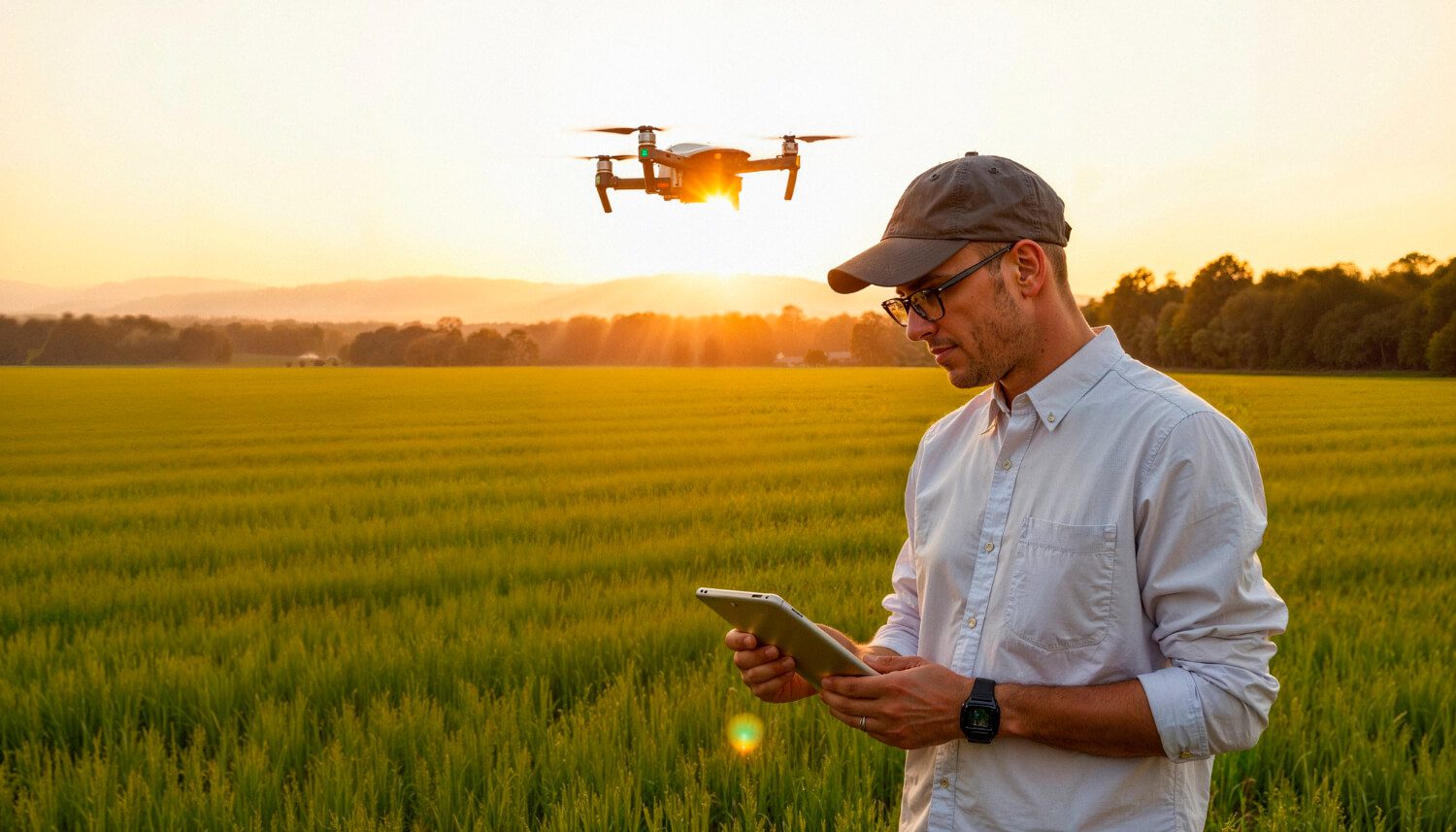
The potential of AI in farming goes far beyond simple automation. With the rise of agentic AI in farming, these intelligent assistants are able to interact with farmers, process vast datasets, and take proactive actions that save time and resources. Below are the main areas where AI agents for farming are already making an impact:
Data processing & insights
Modern farms generate massive amounts of data from IoT sensors, drones, and satellite images. AI agents can turn this raw data into farmer-friendly insights. For example, instead of delivering complex spreadsheets, an agent can generate a simple health report highlighting crop stress zones or send a WhatsApp alert about falling soil moisture levels. This makes decision-making faster and easier for farmers of all scales.
Farm management
Administrative work takes up valuable time. AI agents automate repetitive tasks such as auto-generating weekly crop and finance reports, sending reminders via WhatsApp or Telegram, and managing scheduling for field operations. This streamlines daily activities and allows farmers to focus on growing their business rather than managing paperwork.
Finance & insurance
Access to credit and protection from risk are vital in agriculture. AI agents can automate farm loan applications by linking to production data, build AI-powered risk profiles for lenders, and even auto-submit insurance claims triggered by satellite imagery of weather events. This reduces bottlenecks and speeds up financial processes for both farmers and agribusinesses.
Agronomy advisory
AI agents act as digital agronomists, delivering crop-specific recommendations, providing real-time alerts on potential pest or disease outbreaks (based on weather and satellite feeds), and summarizing trial data into easy-to-read guides for farmers. These advisory functions help improve yields while making advanced agronomic knowledge more accessible.
Sustainability & precision farming
A critical application of AI in farming is supporting sustainable practices. AI agents can optimize resource use by reducing fertilizer and pesticide waste, ensuring compliance with sustainability regulations, and helping with ESG reporting. They also play a central role in the role of agentic AI in farming for precision agriculture—matching inputs exactly to crop needs, reducing environmental impact, and boosting efficiency.
Machinery & irrigation
Farm machinery and irrigation systems benefit greatly from automation. AI agents can summarize maintenance logs, provide predictive maintenance reminders, and notify dealers when equipment issues arise. In irrigation, they can generate weekly water plans, alert farmers when soil moisture is too low, and optimize pump schedules according to energy tariffs. This ensures both equipment longevity and smarter water use.
What are the 5 types of agents in AI?
In artificial intelligence, agents are categorized based on how they perceive their environment and make decisions. The five main types are:
Simple reflex agents
Act only on the current situation, using predefined rules. For example, if soil moisture is low, trigger irrigation.
Model-based reflex agents
Consider both current input and an internal model of the environment, enabling more context-aware actions.
Goal-based agents
Make decisions by evaluating whether an action will help achieve a specific goal, such as maximizing crop yield.
Utility-based agents
Compare different outcomes to select the one with the highest benefit, like balancing water savings with yield optimization.
Learning agents
Continuously improve by learning from experience and adjusting their behavior, making them ideal for complex, changing environments like farming.
Can AI replace farmers?
The short answer is no – AI cannot replace farmers. Farming is a deeply human profession that relies not only on data and efficiency but also on local knowledge, intuition, and decision-making shaped by years of experience. What AI, IoT, and drones bring to the table is support, not substitution. These tools reduce repetitive manual labor, improve profitability, and help protect natural resources, but the farmer remains the decision-maker.
There are several reasons why AI in farming will never replace the farmer:
Contextual knowledge. Farmers understand the unique conditions of their soil, climate, and community. AI can provide recommendations, but it cannot fully grasp cultural practices or farmer intuition.
Adaptability. Weather, pests, and market demands change unpredictably. Human judgment is essential for adapting strategies in real time.
Relationship management. Farming is also about people—managing workers, negotiating with suppliers, and building trust with local markets. These are tasks AI cannot replicate.
Ethics and responsibility. Farmers bear responsibility for food safety, animal welfare, and sustainable land use. AI can guide decisions, but accountability rests with humans.
Instead of replacement, AI gives farmers a competitive advantage. Those who adopt AI agents for farming, IoT systems, and precision tools will operate more efficiently, reduce costs, and gain insights that others without technology cannot match. For example, AI-driven irrigation systems help reduce water usage while protecting yields, and farm management agents generate automated crop and finance reports that save hours of administrative work.
This exact debate – whether AI will replace farmers or empower them—has been a recurring theme in the Digital Ag Global podcast.
In Episode 8, “AI Meets Agriculture: Hype vs. Harvestable Results”, Hassan Halawy, CEO of Elite Agritech Division, and Tom Gauthier, Founder of AgTechLogic, discussed how agentic AI in farming is often hyped as a replacement, but in reality, its true value lies in giving farmers more time and better tools to make profitable, sustainable decisions.
Similarly, in Episode 6, “Farmers’ Lens: Perceiving Innovation in AgTech”, Brandon Hunnicutt, Partner at Hunnicutt Farms, and Scott Ross, Executive Director of the Canadian Federation of Agriculture, shared how farmers themselves perceive innovation. They emphasized that while AI is powerful, it will always need to complement farmer expertise rather than compete with it.
The takeaway is clear: the future farmer is not replaced by AI, but strengthened by it.
Deep dive: farm management solutions agent
Farmers today deal with more than planting and harvesting. They spend hours on paperwork, compliance forms, and data analysis. These tasks are necessary but take valuable time away from core farming work.
AI agents help solve this problem. They reduce the administrative burden, organize information, and present it in simple ways. This frees up farmers to focus on growing crops, managing livestock, and making important business decisions.
AI agents also improve decision-making. By processing complex data quickly, they provide insights that would take farmers much longer to figure out on their own. The result is less stress, more efficiency, and better planning.
How it works
Auto-generate weekly crop and finance reports
The agent creates reports automatically, saving hours of manual work and making financial and crop planning easier.
Task reminders via WhatsApp or Telegram
Farmers receive reminders on platforms they already use every day. This ensures tasks are not forgotten and schedules stay on track.
Summarize IoT and sensor data into farmer-friendly insights
Instead of showing raw numbers, the agent translates complex sensor readings into simple recommendations, like when to irrigate or adjust fertilizer.
Together, these features show why AI agents are valuable tools in farm management: they save time, simplify complex tasks, and help farmers make smarter decisions.
Benefits of AI agents in agriculture for farm management solutions
Using AI agents in farming brings practical benefits that directly impact daily operations and long-term success. These tools are not about replacing the farmer—they are about making farm management smarter and less time-consuming.
Saves time on paperwork
Farmers spend hours preparing reports, tracking expenses, and managing compliance forms. AI agents for farming generate crop and finance reports automatically, cutting down on administrative work and giving farmers more time for core activities.
Improves productivity
Task reminders and scheduling features keep farmers organized. With an AI agent ensuring deadlines and field operations are not missed, farm productivity increases without adding more labor.
Simplifies complex data
Modern farms use IoT devices and sensors that generate large amounts of data. On their own, these numbers can be overwhelming. AI agents translate the data into clear insights—like when to irrigate or fertilize—making advanced technology accessible to all farmers.
Supports financial management and compliance
With automated reporting, farmers gain a better view of costs, revenues, and resource use. This helps improve budgeting, meet regulatory requirements, and strengthen decision-making for sustainable growth.
With automated reporting, farmers gain a better view of costs, revenues, and resource use. This helps improve budgeting, meet regulatory requirements, and strengthen decision-making for sustainable growth.
How farmers can start using AI agents
Getting started with AI in farming does not have to be complicated. Farmers can take small steps and see results quickly.
Identify the pain point
Look at where most time is being wasted. Is it paperwork, irrigation, or planning? Start with the biggest challenge.
Choose one agent
Pick a single solution, such as a farm management agent for reports or an irrigation agent for water scheduling. Focus on solving one problem first.
Integrate with daily tools
AI agents for farming work best when connected to tools farmers already use, like WhatsApp, Telegram, or simple dashboards. This makes adoption easy.
Expand usage
Once the first agent is running smoothly, add more. Over time, farmers can use multiple AI agents in farming that work together—managing tasks, water, finances, and compliance.
At Qaltivate, we help set up AI agents quickly so businesses can test them before committing full-time or implementing them as long-term solutions. A short consultation and careful selection of the right agent can bring instant ROI. Just let us know your business use case, and we’ll design the right solution for you.