Foodtech software development services: everything you need to know
Foodtech software has shifted from a niche innovation to a mission-critical tool that drives efficiency, compliance, and growth across the entire food supply chain — from the field and factory floor to distribution centers and consumers’ plates. As traditional food systems become more complex, with higher demands for sustainability, safety, and speed, both established foodtech companies and innovative foodtech startups are turning to software solutions to solve persistent challenges in production, forecasting, traceability, and distribution.
Food supply chains are inherently complex networks involving multiple stakeholders, tight regulatory standards, and delicate logistics. Software platforms help synchronize data across suppliers, processors, transporters, and retailers, enabling real-time visibility into inventory, compliance, and quality control. Technologies such as blockchain, cloud computing, and analytics — all components of modern foodtech software — are now central to enhancing traceability and reducing waste in these systems.
Talk to a foodtech software expert about your use case
The economic scale of this transformation is significant. The global food technology market — which includes software systems for supply chain management, food safety, and logistics — was valued at about USD 205 billion in 2024 and is projected to surge to around USD 601 billion by 2033, growing at an 11.6% CAGR. Meanwhile, specific industry software supporting food and beverage enterprises is forecast to grow from approximately USD 7.8 billion in 2025 to over USD 11.3 billion by 2035, as companies expand digital tools for operational efficiency and compliance.
At the same time, Foodtech startups are rapidly emerging as engines of innovation: many focus on digital ordering, delivery platforms, smart supply chain tools, and cloud kitchen technologies. Recent data indicates that around 67 % of startups in the sector target meal delivery and digital ordering platforms, reflecting rapid adoption of technology-driven food services.
As the industry continues to embrace digital transformation, the role of foodtech software in reducing bottlenecks, improving predictive forecasting, and enabling scalable growth has become indispensable — making it a key differentiator for both large enterprises and agile startups competing in the global food market.
What is foodtech software and how it supports food businesses
Foodtech software refers to specialized digital systems designed to support the unique operational, regulatory, and commercial needs of food businesses across the supply chain. Unlike generic enterprise tools, foodtech software is built with food-specific workflows in mind — including perishability, batch tracking, food safety standards, seasonal demand, and multi-stakeholder logistics.
At its core, foodtech software development focuses on turning complex, fragmented food operations into connected, data-driven systems. These platforms help food manufacturers, distributors, retailers, and service providers replace manual processes, reduce risk, and make faster, more accurate decisions.
Core categories of foodtech software
Most food businesses rely on a combination of the following software categories:
1. ERP and operational management systems
Food-specific ERP solutions handle production planning, inventory, procurement, recipes, batch management, and cost control. Unlike generic ERPs, food-focused systems account for yield loss, expiration dates, quality checks, and regulatory reporting.
2. Traceability and compliance platforms
Traceability software enables end-to-end visibility across the food supply chain, tracking ingredients and finished goods by lot, batch, or serial number. These systems support recalls, food safety audits, certifications, and regulatory compliance, while also improving transparency for partners and consumers.
3. Forecasting, planning, and analytics tools
Forecasting software uses historical data, sales signals, and external factors (such as seasonality or promotions) to predict demand and optimize production and inventory. Accurate forecasting is critical in food businesses, where overproduction leads to waste and underproduction leads to lost revenue.
4. Digital marketplaces and commerce platforms
Foodtech marketplaces connect producers, suppliers, distributors, and buyers through digital ordering, pricing, and fulfillment systems. These platforms streamline procurement, reduce manual coordination, and open new distribution channels.
Together, these categories form the digital backbone of modern food operations, allowing data to flow seamlessly from production to distribution to sales.
Watch Digital Ag Global podcast to learn more about food industry software
Why generic software often fails food businesses
Many food businesses initially try to adapt generic ERP, CRM, or supply chain tools. However, these systems are typically designed for manufacturing or retail in general — not for the realities of food operations.
Generic software often fails because it does not handle:
– Perishable inventory and shelf-life constraints
– Lot-level traceability and recall readiness
– Complex regulatory and food safety requirements
– Variable yields, recipes, and ingredient substitutions
– Seasonal demand and volatile supply conditions
As a result, companies are forced to rely on manual workarounds, spreadsheets, and disconnected tools — increasing operational risk and limiting scalability.
This is why purpose-built foodtech software, or custom foodtech software development, has become essential. By embedding food-specific logic directly into digital systems, food businesses gain better control, higher resilience, and the ability to grow without adding unnecessary complexity.
Custom foodtech software development company — build for real operations
As food businesses face increasing pressure to digitize complex operations, Qaltivate stands out as a custom foodtech software development company focused on building systems that work in real-world food supply chains — not generic demos or disconnected tools.
Qaltivate specializes in foodtech software development that is tailored to the operational, regulatory, and commercial realities of the food industry. Rather than offering one-size-fits-all products, the team designs and builds custom platforms that align with how food manufacturers, distributors, and foodtech startups actually operate — across production, logistics, compliance, and data management.
What differentiates Qaltivate from many foodtech software vendors is its domain-first approach. Every solution is designed with a deep understanding of food supply chain constraints: perishability, traceability, seasonal demand, regulatory compliance, and multi-party coordination.
Qaltivate works at the intersection of:
– food industry workflows,
– modern cloud and data architectures,
– and scalable, long-term software design.
This allows clients to move beyond fragmented tools and spreadsheets toward integrated foodtech software platforms that support growth without adding operational risk.
In addition to hands-on delivery, Qaltivate actively contributes to industry knowledge through its Digital Ag Global podcast — a platform where food, agriculture, and technology leaders discuss real challenges, innovations, and lessons learned from building and scaling digital solutions in the food and agri-food sectors. This direct exposure to industry practitioners helps Qaltivate stay closely aligned with market needs and emerging trends.
Value for manufacturers, distributors, and foodtech startups
For food manufacturers, Qaltivate’s foodtech software enables better control over production, quality, and compliance while reducing manual work and operational blind spots.
For distributors and supply chain operators, custom platforms improve coordination, traceability, and decision-making across complex partner networks.
For foodtech startups, Qaltivate provides a strategic advantage by turning product ideas into scalable, production-ready systems — avoiding early technical debt and supporting faster market validation.
By combining deep industry understanding, custom foodtech software development, and continuous engagement with the food and agriculture ecosystem through initiatives like Digital Ag Global, Qaltivate delivers software that is not just technically sound, but commercially and operationally effective.
EU-based foodtech software companies
EU-based foodtech software companies represent a distinct and influential segment of the global food technology market. While foodtech innovation is global by nature, companies operating from or within the European Union often develop software under a specific set of regulatory, data, and operational expectations that shape how their platforms are built and deployed.
This segment includes both established foodtech vendors and fast-growing startups delivering software for traceability, supply chain management, forecasting, food safety, and digital commerce.
Strengths of EU-based foodtech software companies
EU-based vendors are often recognized for their strong focus on process rigor, compliance readiness, and long-term system stability. Common strengths include:
Advanced traceability and transparency solutions
Many EU-based platforms are designed to support end-to-end traceability, batch and lot tracking, and recall readiness — reflecting the strict food safety and reporting requirements placed on food businesses operating in the EU.
Mature supply chain and planning capabilities
EU foodtech software companies frequently serve complex, multi-country supply chains. As a result, their solutions tend to handle multi-site operations, cross-border logistics, and supplier coordination particularly well.
Strong engineering and product depth
A significant number of EU vendors invest heavily in robust architecture, data accuracy, and long-term maintainability rather than short-term feature velocity.
How EU-based vendors differ in compliance and data practices
One of the key differentiators of EU-based foodtech software companies is how they approach compliance and data governance.
Because they operate under frameworks such as GDPR and strict food safety regulations, these companies typically build software with:
– privacy-by-design and security-by-design principles,
– clear data ownership and access controls,
– detailed audit logs and reporting mechanisms,
– strong support for regulatory inspections and certifications.
This compliance-first mindset often makes EU-based foodtech software particularly attractive to food manufacturers, distributors, and retailers that operate in regulated environments or manage sensitive operational and supply chain data.
Here’s a list of 10 best foodtech software companies headquartered in Europe:
1. Qaltivate
Custom foodtech software development company — Designs and builds tailored foodtech software platforms for supply chain, traceability, forecasting, data analytics, and digital marketplaces. Qaltivate serves food manufacturers, distributors, and foodtech startups with solutions built around their unique workflows, compliance needs, and growth strategies.
2. Scantrust (Switzerland)
Enterprise software provider for product authentication and supply chain traceability using QR codes, smart packaging, and digital assets to verify food origin and combat counterfeits — helping brands improve transparency and consumer trust.
3. Connecting Food (France)
Traceability and transparency software that helps food businesses track products through the entire supply chain, reduce risk, and increase visibility from farm to fork — often using blockchain and open data strategies.
4. Choco (Germany)
Food ordering and procurement platform that streamlines communication between restaurants and suppliers, reducing food waste and improving operational efficiency through digital ordering workflows.
5. Apicbase (Belgium)
Food and beverage management software for restaurants and kitchen operations, including inventory control, recipe costing, and multi-unit oversight to help F&B businesses reduce waste and improve profitability.
6. RELEX Solutions (Finland)
AI-driven planning and forecasting platform for retail and distribution supply chains, supporting demand forecasting, inventory optimization, and replenishment workflows that benefit food supply networks.
7. BRAINR (Portugal)
Factory operations and traceability software for food manufacturers, integrating MES (Manufacturing Execution Systems), IoT, and shop floor data to optimize production, quality, and compliance.
8. FoodDocs (Europe)
Digital food safety and compliance software that allows food businesses to go paperless, streamline audits, monitor traceability, and manage HACCP and other regulatory requirements with automated workflows.
9. Trusty (Italy)
Modular blockchain-based supply chain traceability solution designed to improve end-to-end visibility, compliance reporting, and digital labeling across food supply networks.
10. Railwaymen (Poland / Europe)
Custom software developers building advanced foodtech solutions — including POS integrations, ordering systems, and AI-enabled tools — that help food service and delivery businesses digitize operations.
How these EU-Based Foodtech Software Companies Stand Out
Strength in compliance and traceability. Many European foodtech vendors embed regulatory readiness into their platforms — particularly when operating in markets with strict quality and safety standards. For example, traceability software (like Scantrust and Connecting Food) helps companies verify product provenance and stay audit-ready from farm through delivery.
Operational optimization and forecasting. Vendors such as RELEX Solutions and BRAINR use predictive analytics and connected data to help food businesses optimize inventory, production planning, and replenishment — areas where generic business software often falls short.
Foodservice and marketplace innovations. Platforms like Choco and Apicbase focus on specific foodservice workflows such as supplier ordering and kitchen operations, turning fragmented processes into digital, scalable systems.
Custom and integrative solutions development. Companies like Qaltivate and Railwaymen don’t just offer off-the-shelf products — they design and build software specifically tuned to how each food business operates, bridging the gap between packaged software and bespoke systems.
How foodtech software development is evolving
Foodtech software development is moving beyond basic digitization toward smarter, more adaptive systems that reflect the real complexity of modern food businesses. As supply chains become more volatile and regulatory expectations increase, food companies are demanding software that not only records data, but actively helps them make better decisions, integrate faster, and scale without friction.
Several clear trends are shaping how foodtech platforms are being designed and built today.
AI and data-driven decision-making
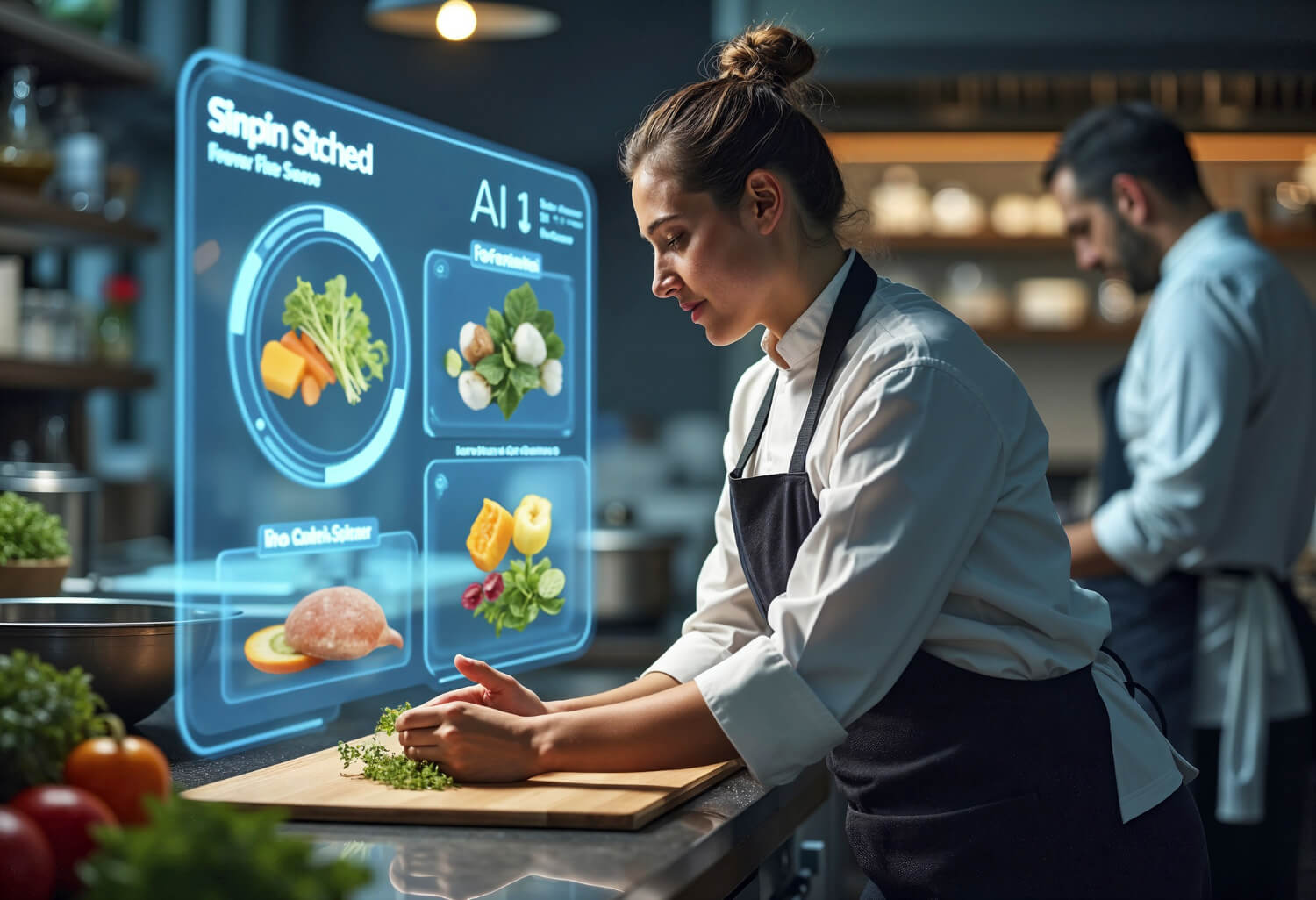
One of the most significant shifts in foodtech software development is the growing use of AI and advanced analytics to support decision-making across the food supply chain. Instead of relying on static reports or historical averages, food businesses are increasingly using data-driven systems to:
– forecast demand more accurately,
– optimize production and inventory levels,
– detect anomalies in quality or supply,
– and identify inefficiencies before they become costly issues.
AI-powered foodtech software helps transform large volumes of operational, sales, and supply data into actionable insights. This is particularly critical in food operations, where small forecasting errors can lead to waste, lost revenue, or compliance risks.
Modular and API-first platforms
Another major evolution is the shift toward modular, API-first architectures. Rather than monolithic systems that are difficult to adapt, modern foodtech platforms are designed as flexible building blocks that can be extended or integrated as business needs change.
– API-first foodtech software development enables companies to:
– integrate ERP, traceability, logistics, and analytics tools more easily,
– connect with partners, suppliers, and marketplaces,
– modernize legacy systems incrementally instead of replacing everything at once.
This approach reduces vendor lock-in and allows food businesses to evolve their digital stack at their own pace — a critical advantage in an industry where operations and regulations frequently change.
Increasing demand for industry-specific solutions
Perhaps the most important trend is the growing demand for industry-specific foodtech software, rather than generic enterprise tools. Food businesses are recognizing that software designed for “any industry” rarely accounts for the realities of food production and distribution.
Modern foodtech software development increasingly embeds:
– food safety and compliance logic,
– traceability requirements,
– perishability and shelf-life constraints,
– and food-specific production workflows directly into the system architecture.
As a result, companies are moving away from heavily customized generic platforms and toward purpose-built or custom-developed solutions that reflect how food operations actually work.
Together, these trends signal a clear direction for the industry: foodtech software is becoming more intelligent, more flexible, and more deeply aligned with the specific needs of food businesses — enabling them to operate with greater resilience, efficiency, and confidence in an increasingly complex environment.