Top 6 agtech trends 2026: from AI agents to carbon farming
AgTech trends 2026 highlight how the agriculture industry is under immense pressure to produce more with fewer resources — facing higher yield expectations, climate volatility, and tighter margins — making the shift from optional innovation to strategic technological adoption a necessity rather than a choice. AgTech adoption is rapidly accelerating as farms seek ways to maximize productivity, improve sustainability, and reduce labor dependency, all while meeting rising global food demand. Investment activity reflects this urgency: over $15 billion was poured into AgTech sectors in 2025 alone, signaling strong confidence in digital farming solutions like AI, IoT integration, robotics, and precision platforms.
Multiple forces are converging to make 2026 a milestone year for AgTech. Climate change and extreme weather patterns continue to disrupt traditional practices, driving farmers toward predictive and adaptive technologies. Labor shortages, particularly in developed markets, are sharpening interest in automation and autonomous systems that can fill gaps where human labor is scarce or costly.
Additionally, the pace of technology maturation — especially in AI-powered decision support and robotics — means solutions are becoming more affordable, reliable, and practical for mainstream adoption across farm sizes. Industry observers now highlight integration, interoperability, and predictive analytics as key differentiators shaping AgTech deployment in the next farming cycle.
In this article, we explore the top AgTech trends for 2026, including:
– AI-driven and data-centric farm management
– Autonomous equipment and robotics
– Climate resilience and sustainability technologies
– Sensor networks, IoT, and real-time analytics
– Digital marketplaces and ecosystem platforms
– Carbon farming & sustainability tech
These trends reflect the growing shift toward smarter, data-informed, and automated agriculture — where technology directly supports productivity, resilience, and profitability in a dynamic global environment.
Turn AgTech trends into opportunities — not missed timing.
Top 6 agtech trends 2026
The agricultural landscape is fueled by digital transformation, automation, and sustainability expectations across global food systems. Below are the Top 6 AgTech trends 2026 that will shape how farms operate, invest, and grow in the coming years — from AI intelligence to carbon monetization.
AI-driven & data-centric farm management
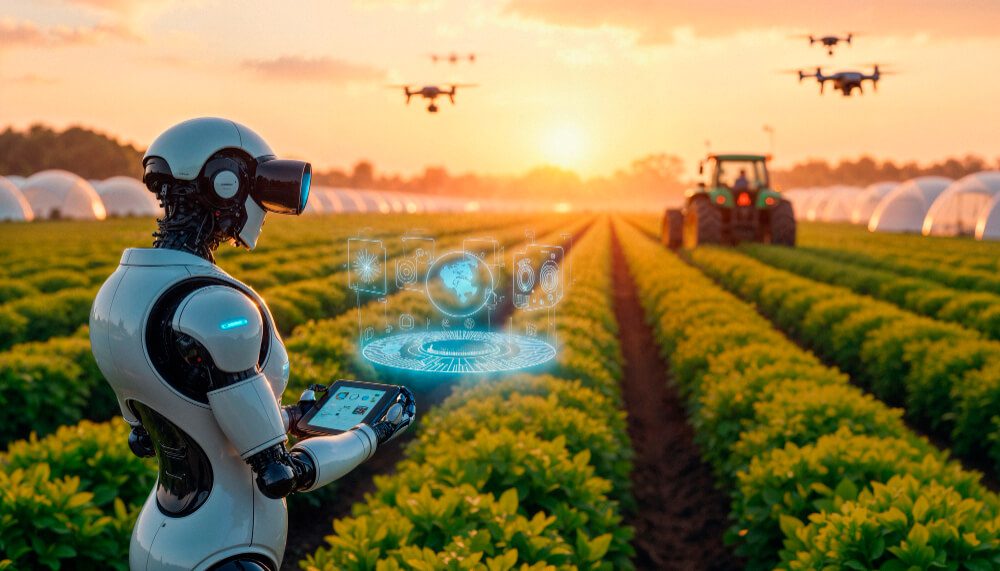
AI in agriculture analytics is moving beyond yield charts and reports to full decision-support systems. Farms and AgTech platforms are increasingly adopting AI-powered farm management tools that retrieve farm data, compare seasons and inputs, detect patterns, and generate actionable recommendations. Instead of manually scanning dashboards or Excel files, farmers can ask the system a question — and get an instant answer backed by multi-year data correlations. As AI becomes a core layer in digital platforms, agriculture trends 2026 point to a shift from data visibility to automated intelligence that supports operational and financial decisions in real time.
What’s changing in 2026:
– Farm management systems (FMS) integrate AI agents and natural-language search
– Predictive yield models and risk forecasting become mainstream
– Farmers ask questions like “Which hybrid performed best on clay soil under drought?” — and AI answers instantly
How this trend impacts digital agriculture:
– Faster, more informed choices with predictive and prescriptive insights
– Less guesswork in hybrid selection, fertilization strategy, irrigation timing
– Stronger ROI from inputs through precision-based recommendations
– Better planning with AI-driven forecasts, alerts, and scenario simulations
With data streams coming from GPS machinery, sensors, weather models, and input records, farms generate more information than any agronomist can manually process. AI in agriculture 2026 becomes the equalizer — turning raw data into decisions, improving productivity while reducing labor and time spent on analytics.
Autonomous equipment & robotics
Labor remains a global bottleneck, making autonomous farming equipment and robotics one of the most transformative AgTech trends in 2026. Farms continue to struggle with seasonal labor shortages, rising wages, and workforce aging, pushing growers to adopt technologies that automate repetitive and labor-heavy tasks. Self-driving tractors, robotic weeders, autonomous sprayers, and harvest robots can operate with minimal supervision — day, night, and even in challenging field conditions. Instead of farms adjusting work pace to labor availability, automation enables operations to run on demand.

What to expect:
– Robot fleets for orchards, vineyards & protected agriculture
– Autonomous drones for monitoring, spraying, and seeding
– Robotics-as-a-service (RaaS) adoption grows among mid-size farms
Impact on digital agriculture:
– Higher operational capacity during peak seasons
– Fewer delays caused by limited labor availability
– Lower cost per acre through precision input application
– Improved worker safety by reducing exposure to chemicals and machinery
– Greater predictability in field operations and harvest logistics
In 2026, robotics will move from “innovation pilots” to commercial adoption across crop types, particularly high-value crops like fruits, vegetables, and specialty grains. Automation doesn’t just replace labor — it redefines field productivity, enabling farms to operate smarter, faster, and more safely.
Climate resilience & sustainability technologies
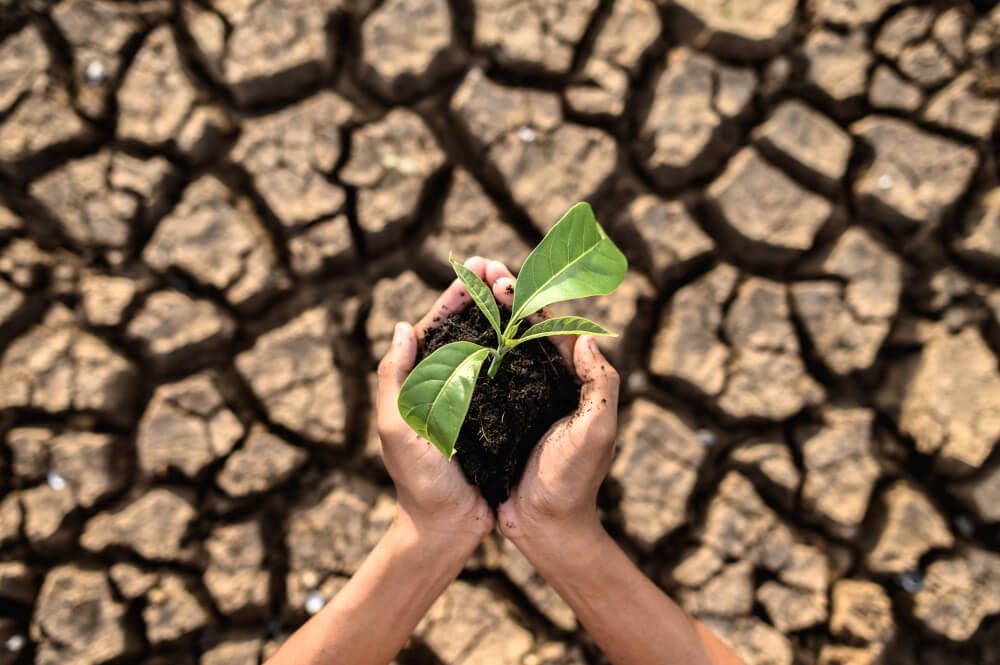
Climate volatility is becoming one of the biggest threats to global food production, accelerating the adoption of climate-smart agriculture solutions. Heat stress, unpredictable rainfall, extreme weather events, and shifting pest pressure are forcing farms to rethink traditional management practices. In response, AgTech industry trends in 2026 are shifting focus from maximizing yield at all costs to building resilience, adaptability, and long-term soil health. The priority becomes growing sustainably and profitably despite climate uncertainty — not only in ideal seasons.
Instead of reactive management, farms are investing in technologies that predict climate impact, automate response, and protect crops proactively. Advanced data models combine weather forecasts, soil moisture trends, and satellite imagery to anticipate drought or disease risk before it spreads. Decisions like irrigation timing, fungicide scheduling, or hybrid selection become data-driven rather than intuitive.
Emerging solutions:
– Drought-tolerant seeds & biological inputs
– Irrigation optimization powered by weather forecasting
– Early-warning systems for disease & pest conditions
Impact on modern agriculture:
– Higher crop stability during extreme weather seasons
– Reduced exposure to climate-related yield losses
– Better water and nutrient use efficiency
– Stronger long-term soil structure and carbon retention
– More resilient production systems for global food security
In 2026, climate technologies aren’t just add-ons — they become core infrastructure. The farms that adopt resilience-focused tools now will be positioned to maintain profit margins, qualify for sustainability incentives, and withstand climate shocks more effectively than those relying solely on traditional methods.
Sensor networks, IoT & real-time farm analytics
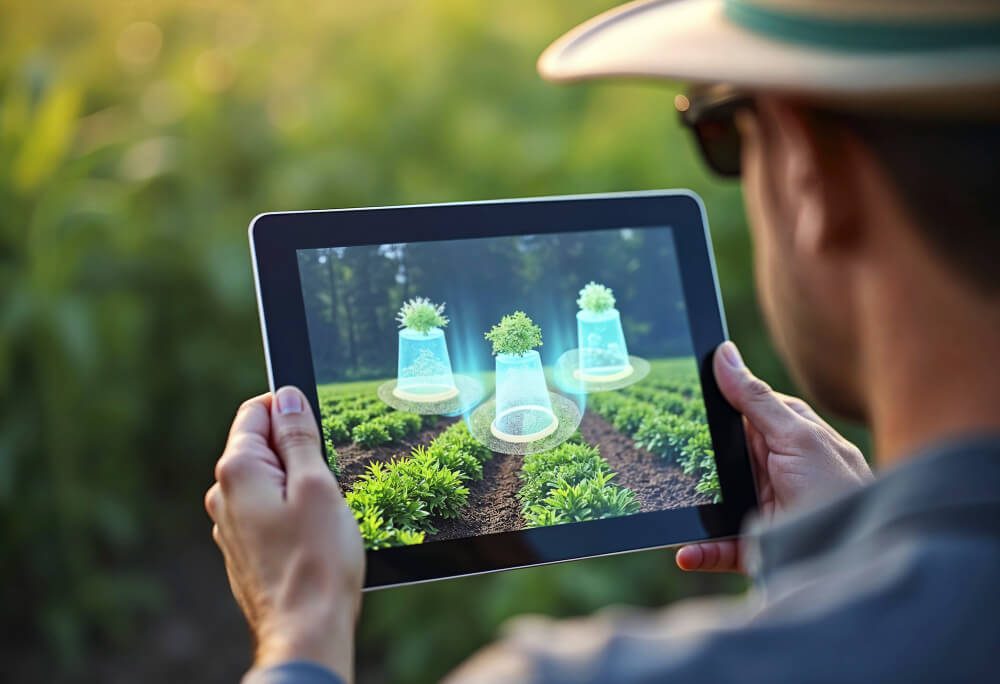
The era of connected agriculture is accelerating, and Sensor networks and IoT technology are becoming foundational to modern farm operations. Instead of waiting for end-of-season reports or visual inspection in the field, farmers gain real-time visibility into soil moisture, plant stress, machine performance, livestock movement, and even micro-climate variations. As these systems scale, farms move from reactive management to continuous monitoring — receiving alerts, tracking anomalies, and adjusting inputs instantly.
This connectivity is one of the most powerful AgTech market trends 2026, driven by affordability of sensors, improved connectivity, and cloud platforms capable of streaming and processing data 24/7. Every field, barn, and piece of equipment becomes a data source — turning the farm into a network of measurable operations.
IoT sensors feed live information into farm management platforms, enabling automated decisions such as irrigation scheduling, greenhouse climate control, or herd health alerts. Instead of field scouting alone, farmers can check dashboards or mobile apps to see where stress is forming before yield loss occurs.
What’s trending in 2026:
– Soil & weather nodes providing hyperlocal data
– Livestock wearables tracking health & activity
– Edge computing for remote farms with poor connectivity
Impact on precision agriculture:
– Lower water and chemical use without sacrificing yield
– Inputs applied at the right time, rate, and location
– Early detection of plant and animal stress reduces losses
– Better compliance reporting and traceability with automated logs
– Real-time decision-making improves operational efficiency
As IoT adoption scales, precision agriculture becomes the default, not a premium option. Farms that leverage sensor networks will operate with greater control, predictable outcomes, and a data-rich foundation for future AI automation — and by 2026, this will be a competitive standard across the industry.
Digital marketplaces & data ecosystems
The future of agriculture is interconnected, and digital marketplaces are rapidly transforming how inputs are bought, grain is sold, and advisory services are delivered. Instead of operating through fragmented channels, farmers now gain access to unified platforms where they can compare suppliers, check grain prices, book agronomists, arrange transport, or even trade carbon credits — all in one interface. This evolution marks one of the strongest AgTech investment trends 2026, where capital is flowing into platforms that unlock efficiency, transparency, and data-driven commerce for the entire agricultural value chain.
Marketplaces reduce the complexity that comes with calling multiple suppliers, negotiating pricing separately, or relying on spreadsheets for buyer coordination. With digital ecosystems, farmers can make decisions faster and with more confidence — backed by real-time pricing, product performance insights, and logistics visibility. For input manufacturers and grain buyers, marketplaces open access to wider customer networks and structured data on crop performance and regional demand.
What to watch:
– Multi-stakeholder data platforms replace siloed apps
– Marketplace integrations inside FMS become standard
– Subscription-based advisory and remote agronomy services scale
Impact on agricultural commerce:
– Lower friction in input purchasing and crop selling
– More competitive pricing through comparison and transparency
– Better access to advisory and agronomy services, even in remote regions
– Faster negotiations, reduced paperwork, and automated traceability
– Smarter commercial decisions informed by real market data
In 2026, digital marketplaces evolve from transactional platforms to end-to-end ecosystem hubs, connecting data, services, and stakeholders across the supply chain. The result is a more efficient agricultural economy — one where value moves with less friction, and where farms operate with the same digital convenience seen in modern e-commerce.
Carbon farming & sustainability tech
In 2026, carbon farming becomes a profitable channel rather than a sustainability side project. Farms leveraging soil carbon measurement, digital MRV platforms, and regenerative practices will access carbon credits for additional income.

Growth drivers:
– Government incentives and carbon reporting regulations
– Digital MRV platforms make measurement and verification scalable
– AI models forecast sequestration potential & revenue
Impact: New monetization streams, healthier soils, long-term regenerative value.
Carbon-focused agriculture is shifting rapidly from a niche sustainability initiative to a revenue-generating opportunity for farmers, driven by global decarbonization goals and corporate emissions commitments. As more governments and enterprises push toward climate neutrality, agricultural soils are gaining economic value as a natural carbon sink — and farms that can measure, verify, and validate carbon sequestration will be well-positioned in 2026.
What’s driving adoption?
– Carbon credits offer additional revenue, not just cost savings
– Soil health and regenerative practices increase resilience long-term
– Governments introduce incentives and regulatory frameworks for carbon capture
– Retail and food companies seek traceable low-carbon supply chains
Key opportunities for product builders & AgTech providers
– Build carbon module add-ons for existing FMS platforms
– Integrate soil/biomass sensors with carbon accounting models
– Create RAG-enabled carbon knowledge tools for agronomists
– Develop regional carbon calculators tailored to soil type & climate
– Design farmer-friendly MRV systems to minimize reporting friction